
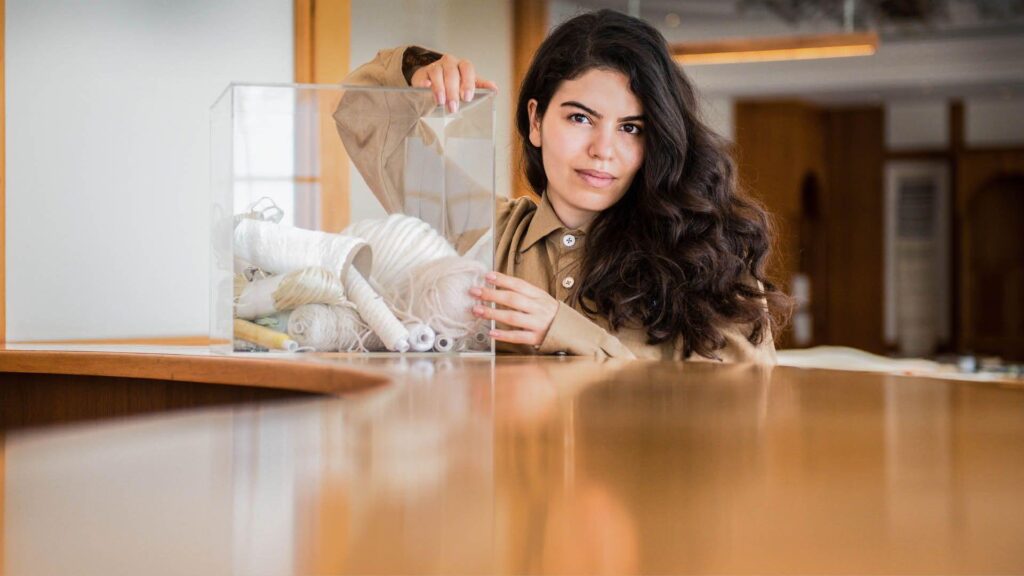
Hala Kaiksow: The Bahraini Designer Turning Fashion Into Art
Handwoven textiles, sculptural silhouettes and a deep connection to heritage. Inside the distinctive creative world of one of Bahrain’s most intriguing designers.
There are clothes designed to be worn. And then there are clothes that make you stop, look closer and wonder how they were made.
Bahraini designer Hala Kaiksow works somewhere between the two.
Her creations are not easily categorised as fashion, sculpture or textile art. They occupy a space of their own, where traditional weaving meets contemporary design, unexpected materials become beautiful details, and garments carry stories far beyond the runway.
In a fashion industry built around constant newness, Kaiksow’s approach feels refreshingly different.
For her, the process of making something matters just as much as the finished piece.
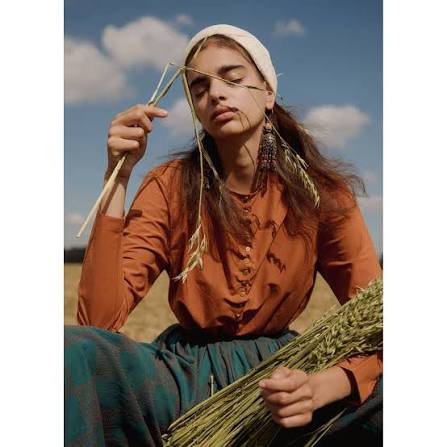
From Sculpture to the Loom
Kaiksow’s creative journey began long before she established her fashion label in 2016.
She studied fine arts at Tufts University in Massachusetts, specialising in sculpture, before completing a master’s degree in Collection Design at Polimoda in Florence.
That background helps explain why her garments often resemble wearable works of art.
Rather than beginning with conventional fashion silhouettes, she approaches clothing through form, texture and construction.
A fabric might be woven specifically for a garment. A fastening might be made by hand. A familiar material might be combined with something entirely unexpected.
The result is clothing that feels both ancient and futuristic.
The Beauty of Making Things Slowly
At the heart of Kaiksow’s work is the loom.
Raw linen, silk and hemp are transformed into intricate textiles, often incorporating natural dyes and details made from wood, metal, latex or mother of pearl.
These aren’t simply decorative choices.
They reflect a philosophy that values the human hand, traditional knowledge and the individuality of handmade objects.
Her designs invite a closer look: the uneven beauty of natural fibres, the subtle variations in woven patterns, the sculptural quality of a fastening.
In a world of mass-produced fashion, those details feel increasingly rare.
Kaiksow’s work also challenges the idea that luxury must be defined by recognisable logos or elaborate embellishment.
Sometimes, luxury is the time taken to make something properly.
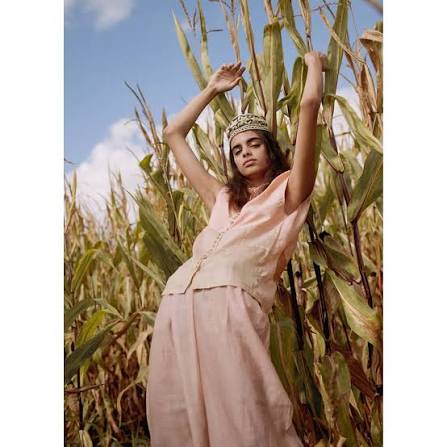
A Bahraini Identity Without the Obvious References
What makes Kaiksow particularly interesting is the way she approaches cultural heritage.
Rather than simply reproducing traditional Bahraini garments, she studies their construction, function and history before interpreting them through a contemporary lens.
Her influences extend well beyond Bahrain, drawing on historical clothing, nomadic cultures and traditional craft techniques from different parts of the world.
Yet Bahrain remains an important part of her creative vocabulary.
Its landscape, architecture, textile traditions and everyday materials have all informed her work.
The connection is often subtle.
You might not immediately recognise a garment as Bahraini, but its relationship with the country’s history and craftsmanship is woven into its construction.
It’s an approach that feels particularly relevant to a new generation of regional creatives: rooted in identity without being restricted by it.
From Bahrain to the Victoria and Albert Museum
Kaiksow’s work has also reached audiences far beyond the Kingdom.
In 2018, she was shortlisted for the Jameel Prize 5, an international award recognising contemporary art and design inspired by Islamic tradition.
Her work was exhibited at London’s Victoria and Albert Museum, placing her textile practice within an international conversation about art, culture and craftsmanship.
She has also presented fashion collections in Paris and participated in international art exhibitions, including a project associated with the Venice Biennale in 2019.
These milestones reflect something significant about her practice.
Although clothing is central to her work, her creative identity extends beyond the conventional boundaries of fashion design.
She is as much an artist and maker as she is a designer.
Why Kaiksow’s Work Feels Especially Relevant Today
Fashion’s relationship with sustainability has become an increasingly important conversation.
But long before sustainability became a widely used marketing term, Kaiksow was exploring slower production, natural fibres, traditional techniques and the value of creating garments intended to last.
Her approach isn’t about producing endless collections or responding to every passing trend.
It’s about asking what clothing can mean when time, skill and intention become part of its value.
And there’s something particularly compelling about that philosophy today.
As fashion becomes faster, more digital and increasingly influenced by algorithms, the physical act of making something by hand feels almost radical.
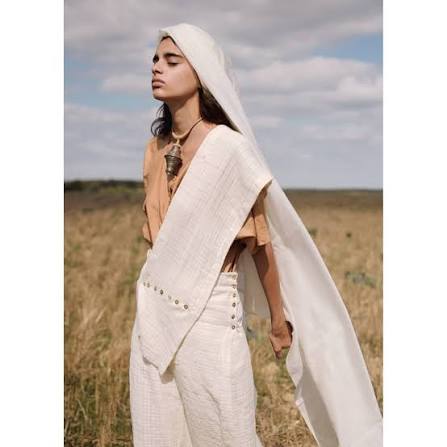
Weaving New Stories in Bahrain
Kaiksow’s connection to Bahrain’s craft community remains visible in her recent work.
In September 2026, she participated in a weaving programme at Albareh Art Space in Adliya, working alongside fellow designer Marie Joubert and master weaver Habib Mohammed Saleh.
The collaboration brought contemporary designers into direct conversation with traditional weaving knowledge.
It’s a small but meaningful example of how craft traditions can remain active rather than becoming objects of nostalgia.
For Kaiksow, heritage is not simply something to preserve behind glass.
It’s something to work with, question and transform.
More Than Fashion
Perhaps that’s what makes Hala Kaiksow’s work so captivating.
It doesn’t demand attention through spectacle. It rewards attention through detail.
Every textile, texture and silhouette invites us to reconsider the relationship between clothing, craftsmanship and the person who made it.
And while her designs may be photographed as fashion, their appeal extends much further.
They remind us that creativity doesn’t always have to move faster to move forward.
Sometimes, the most interesting thing a designer can do is return to the loom.
Discover more of Hala Kaiksow’s work at halakaiksow.com.
And keep up to date with all things cool at The Social Magazine